Pediatric Integration Program
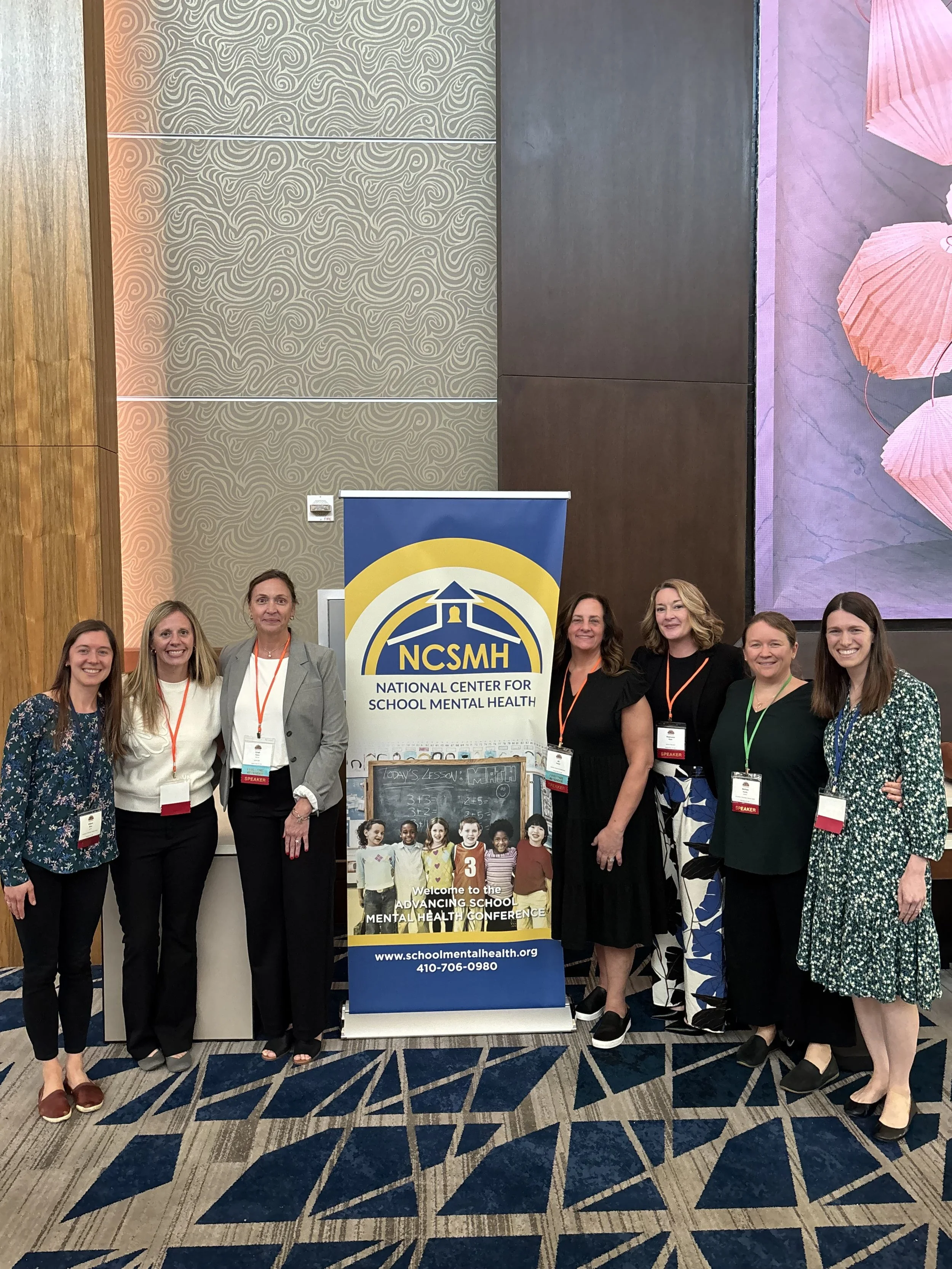
2025 Advancing School Mental Health Conference (left to right): Allison Stiles, PhD (University of Rochester); Hennessey Lustica, PhD, LMHC, (NYSMHA); Cristi Kuhn, School Counselor (Lyons CSD); Jill Harper, RN, Optimal Health Director (Wayne County Community Schools); Stephanie Betts, LMSW (NYSMHA); Melissa Heatly, PhD (University of Rochester); Laura Perrone, PhD (University of Rochester).
Program Overview
The Pediatric Integration Program supports schools in strengthening collaboration between educational teams, healthcare providers, and community-based services to improve outcomes for students with high and complex needs. The program is designed to reduce system fragmentation and ensure that students and families experience coordinated, timely, and comprehensive support across school and medical settings.
Who We Support
School districts and building-level teams
School psychologists, counselors, social workers, and related service providers
School psychology interns and clinical supervisors
Students with complex medical, behavioral, and mental health needs and their families
What We Do
The Pediatric Integration Program provides targeted guidance, training, and consultation to help school teams effectively partner with pediatric and medical providers. Key areas of focus include:
Building shared understanding between schools and healthcare systems
Strengthening communication and care coordination across disciplines
Aligning school-based interventions with medical and pediatric treatment plans
Supporting family engagement and navigation of services
How This Supports MTSS
The program helps districts integrate pediatric expertise into Multi-Tiered Systems of Support (MTSS), particularly at Tier 2 and Tier 3. By understanding how medical, developmental, and behavioral health factors intersect with learning, school teams can make more informed decisions, select appropriate interventions, and respond more effectively to student needs.
Impact for High-Needs Students and Families
By improving cross-system collaboration, the Pediatric Integration Program helps schools:
Expedite access to appropriate services and referrals
Reduce duplication and delays in care
Improve continuity of support across school and healthcare settings
Ensure students with complex needs receive timely, coordinated, and child-centered services
These efforts are especially critical for high-needs students and families who often navigate multiple systems simultaneously. The program supports schools in becoming more effective partners in care, leading to improved outcomes and stronger school-family-provider collaboration.